Lu Zhuoran, also known as Takuzen, uses a photo of a smiling Steve Jobs holding the first Apple computer as his WeChat avatar. Born in the 2000s, Lu grew up in Shenzhen and moved to Japan at 15. He studied robotics and computer science at a Japanese institution described in the source interview as the country’s fourth most selective, then transferred to the University of Wisconsin-Madison to study computer science. His explanation was that robotics remained very traditional without intelligence.
In 2023, he developed an interview application with a digital avatar powered by a large language model. He had not planned to raise funding, but an intern persuaded him to submit an application. The project secured investment from MiraclePlus, founded by Lu Qi, and had one of the youngest teams it backed that year.
After ChatGPT appeared, Lu decided the moment for humanoid robots had arrived and dropped out to start a business.
His company, Rotaku, now has a team of ten. According to the interview, it develops all layers of its humanoid robot hardware and software in-house, operates its own factory rather than using an original design manufacturer, and has received numerous orders.
While peers raise large sums and push prices below RMB 10,000 (USD 1,490), Lu says the industry produces “industrial junk” and rejects low prices as the guiding strategy. He also puts the probability of human extinction within 50 years at about 20%, an estimate based on his own reasoning.
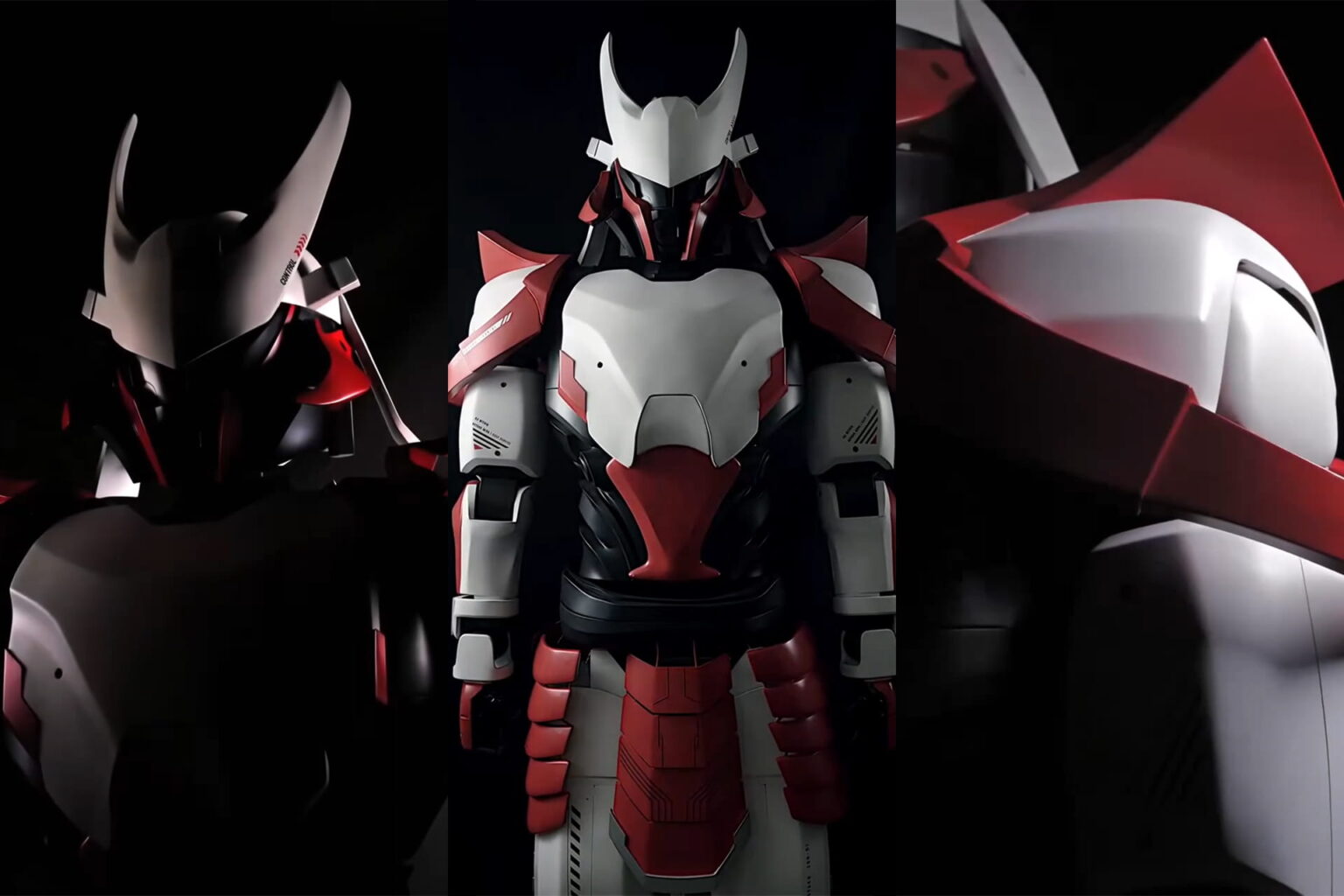
Those convictions shape his work. He calls his product a “character humanoid”: a robot given a distinct character, rather than simply a body for sale. He describes his personality and approach as a blend of Japanese, Chinese, and American cultures.
He spoke with 36Kr about aesthetics, his path into robotics, and the platform he hopes to build.
The following transcript has been edited and consolidated for brevity and clarity.
36Kr: Starting with your avatar, what draws you to Steve Jobs and Elon Musk?
Lu Zhuoran (LZ): Both have fundamentally serious, even anguished personalities. When Musk’s early rockets kept exploding, he stood alone in the factory looking at the wreckage. That is the image of him I like most. Under that much pressure, people use an irreverent attitude to counter life’s pain.
Jobs’s appeal was his deep understanding of society and human nature, expressed through an uncompromising aesthetic.
36Kr: Many hardware makers focus on making things cheap and useful. Why isn’t that enough?
LZ: Apple could build its software ecosystem because its hardware was attractive in its own right. Hardware must also express identity. Your phone is the most important device through which you create value, and it strongly influences how you see the world. Using it represents a lifestyle and a set of values.
Look at Apple’s stores: floor-to-ceiling glass, craftsmanship, and the feeling of a grand hall. The products are presented like sacred objects, so a phone feels like more than a tool. The loyalty that creates is something competitors struggle to understand.
Jobs understood beauty deeply. Windows only changed its sharp window corners to rounded ones with Windows 11. When engineers argued with Jobs during the development of the Macintosh, he took them outside and pointed out the rounded corners of signs. That obsession with detail gives a device a significance beyond its function.
People often say Apple resembles a Japanese company. Having lived in Japan from age 15, I see it as a country organized around an awareness of beauty. Cities, gardens, and relationships do not operate only through rules imposed from above. People instinctively consider the distance between things and between people, looking for a beautiful balance.
What I learned from Jobs is that a product should do more than advertise its specifications or win users through utility. It should offer an experience that is hard to put into words, balanced in how it engages the user, and capable of inviting the imagination in an instant. To me, that matters most.
36Kr: The industry talks about locomotion and dexterous manipulation. Why do you keep returning to character?
LZ: A humanoid robot is the first product in human history to inhabit our physical world in human form. It is much more than industrial design. In Japanese architecture, four pillars and a roof can create a sense of place. A humanoid robot similarly establishes a relationship with a space and its occupants through tiny head and hand movements. Its power lies in those details.
An important idea in Japanese aesthetics is ki, a sense of energy or presence. The Japanese language combines it with verbs in hundreds of expressions, which is unusual in other cultures. A Japanese architect once said that if you spent the night in a desert, you would want to sleep beside a tree: it creates a presence that surrounds and reassures you.
Everything creates a presence. Humans are social animals, most readily affected by the presence of other people. For a humanoid robot, the crucial thing is how small movements create that presence and affect you.
If you see it only as industrial design, you miss what will drive its development. For us, the main value lies in the interaction model, the underlying character model, motion control, and even the way it walks.
The collectible toy market already shows this. If an unmoving object can move you emotionally, it has achieved something. Pursuing aesthetics and pursuing rationality to their limits lead to the same destination. Japanese aesthetics also has mono no aware, the sorrow of impermanence, which gives a product emotional depth.
Musk pushes rationality to its limit and arrives at a multiplanetary civilization. Japanese aesthetics, pursued to its limit, confronts the passing of life. Both paths ultimately face the same question.
36Kr: What makes a character in your designs?
LZ: A character needs a worldview, a life story, and its own way of seeing the world. It needs admirable qualities and flaws. Human strengths, weaknesses, and hardship give it appeal.
36Kr: How did you secure the MiraclePlus investment?
LZ: The project automated job interviews for businesses through an artificial intelligence agent with a digital avatar. A job candidate spoke with the AI, the data was fed back to the system, and the AI made an assessment.
I had not planned to raise money. An intern found the opportunity and asked me to fill in the application. He had already completed the basic information and said, “Why not submit it?” I did, and the investment followed.
36Kr: How did Lu Qi assess you?
LZ: He generally evaluates people on three dimensions: resilience, vision, and ability. Vision is how clearly you see the future. Ability is your underlying capability. Resilience is the strength of character that carries you through difficulties.
He said my vision and ability were average among founders at that stage, but my resilience was exceptional. He drew a graph with ability on the horizontal axis and vision on the vertical axis. Jobs and Musk were at the top right. He told me resilience was the force that could push me there.
36Kr: What advice did he give you?
LZ: He thought the market was too small and urged me to change direction and do something much bigger. The MiraclePlus team can help you think through possible directions, but the founder must ultimately choose the path.
Later, I realized I wanted to address humanity’s survival step by step. To me, that is the fundamental problem; emotions, desires, and other needs are secondary.
His exact words were, “Stop doing this. You need to do something very, very big.” I did not fully understand then. I understood later.
Starting a company is a process of discovering who you are. Many founders may be working on something that is not their calling. I found what I wanted to do only after deciding what was worth doing.
36Kr: Why did you choose humanoid robots?
LZ: I concluded that I should either start a space company or a humanoid robot company. Space development requires automation, energy collection, infrastructure, creating atmospheric and greenhouse environments on planets, and repairing space stations and satellites. Those are fundamentally robotics problems.
Humanoid robots are the common denominator. In terms of data, long-term adaptability to different environments, and data collection, I see the human form as optimal. So I decided to address humanoid robots first.
36Kr: Does your estimate of a 20% probability of human extinction within 50 years affect your daily work?
LZ: It determines my strategy at a broad level. My logical reasoning leads me to that high estimate. I consider both the market’s development and its connection to long-term goals: building a platform, feeding the data it generates back into development, and improving the models.
36Kr: What would you do if this venture failed?
LZ: I would probably start a space company.
36Kr: You have publicly said the humanoid robot industry produces “industrial junk.” Have peers taken offense?
LZ: They are friends and mentors. We want to cooperate and grow the market together. They understand what I mean.
36Kr: What do you see as the problem with Chinese manufacturing?
LZ: China has moved beyond the stage of simply making things cheap and well, but few brands truly occupy a place in users’ minds. Some humanoid robots now sell for less than RMB 10,000.
New consumers economize on standardized products but will spend a lot on things that meet higher-order needs. Robotics requires resources and engineering expertise, and many current founders are industry veterans. Over the long term, younger founders representing new ideas and trends will win.
36Kr: Have any peers impressed you?
LZ: AheadForm is good. It makes lifelike robotic faces. The faces in its previous product demonstrations were convincing. The latest ones seemed a little stiff and fell into the uncanny valley.
Could that other robotics company that has recently become famous do this well? It is hard to say. From its founder’s interviews, I do not get the impression that he could create a good lifelike face. It depends on subtle details of makeup and bearing. The emotion a face conveys can touch people deeply; otherwise, it would not attract so much attention online.
36Kr: What differences have you experienced between starting a company in China and the US?
LZ: We originally incorporated in San Francisco. But anyone doing the engineering will recognize China’s advantage in embodied intelligence: large-scale deployment at very low cost, generating data that can improve the product.
We have been global from day one. Ultimately, we want to bring top-quality products to the US, Japan, and Europe.
36Kr: What is hardest about moving from a concept to a product demonstration?
LZ: Our robot does not need vigorous movement, but it still requires cable management, engineering optimization, and thermal management for the motors.
It spans engineering, models, design, character-based consumer products, community, large language models, and embodied AI models. You have to find a workable path to a business that sustains itself.
36Kr: How do you choose applications? Can you give an example?
LZ: Our partners are working extensively in food service, where the robot becomes part of the setting. Restaurants used to buy spoons and pots as standardized tools. But once humanoid robots become a large part of customer service, they have to reflect the company’s branded characters.
Here is how I think about SKUs: the automotive sector has roughly 20–50, while collectible toys, including Pop Mart, have thousands. A mature character humanoid company should sit between them, with dozens to hundreds.
Why can’t automotive companies offer that many? Tooling costs roughly RMB 3–10 billion (between USD 446.9 million and USD 1.5 billion) and allows little reuse. We aim to change that cost structure through reusable robot bodies, an AI platform, and end-to-end models, allowing us to support more characters. That is the thinking behind character humanoid robots.
36Kr: What do investors most misunderstand about you?
LZ: They think the leading players are already established and capital should concentrate there. But we are working at the character and application layer. A world model provides the model layer, and the robot body sits in the middle. Adding character is what makes the humanoid robot a complete product that reaches end users and creates value.
We do not need to appeal to every investor, only those who understand us.
36Kr: Why must something with a human form have a character?
LZ: A human-shaped object is unlikely to work as a purely mechanical tool; that feels incongruous. People have imagined humanoid robots in two ways: completely realistic or radically stylized. Film characters are often stylized rather than lifelike androids.
Longstanding expectations, evidence from established markets, and the logic of the product all point toward character.
36Kr: You keep using the term “character humanoid.”
LZ: Demand for defining a character with a single sentence has already been demonstrated. With a character humanoid, that sentence gives the AI a role in its relationship with you.
Earlier products of this kind offered limited value because humans are agents in a three-dimensional physical world. Hardware combined with depth of 3D perception can create a competitive advantage that software alone cannot.
I am convinced they are feasible. Models can give people the ability to define a character with one sentence, then express it through bearing, posture, and interaction using a reusable body architecture and shell.
36Kr: What are your three priorities now?
LZ: First, design characters people like. Second, develop model architecture and training that support expressive interaction. Third, find a viable route to selling the robots. Sales have to come before a platform or community.
36Kr: What role would the community play?
LZ: Community would be the strongest barrier to competition. Imagine buying a humanoid robot and having hundreds of thousands or millions of characters available. That would make the difference.
It would be like TikTok or YouTube for humanoid robots. People would create content, with AI helping design shells and expressive movements. A single prompt would let a model control the robot’s mechanical skeleton. Those creations would accumulate as shared community assets.
When users create popular modifications or remixes, we could turn them into official products. We would also consider collaborations with leading artists who already have fans and a track record in the market, including in collectible toys.
For now, the first priority is the quality of the physical product, followed by its interaction patterns and settings. Its fictional world comes after that.
36Kr: Hasn’t the automotive sector already developed characters?
LZ: I would say about 10% of the automotive sector is character-based: classic models, community creations and modifications, portrayals in films and animation, and stories about owners and their cars.
For humanoid robots, I expect that share to exceed 50%, because of the human form itself. Character is fundamental to what a humanoid robot is. If you do not recognize that now, you will miss the opportunity.
36Kr: What do you want the company to look like in five years?
LZ: I hope it becomes the world’s largest character humanoid platform and is recognized for making the best humanoid robots.
I want the body to be modular, like Lego, with parts bought 20 years apart remaining compatible. You could replace a shoulder motor rated at 100 newton-meters with one rated at 300, or swap a ten-centimeter upper arm for a 30-centimeter one. Many communities would operate on the platform, and the model would generalize like GPT to support every character.
36Kr: What is your MBTI type?
LZ: Every test I took before 2025 came back ENTJ. At the broadest level, I rely heavily on logical reasoning. But creating this product also requires intuition and artistic perception in the details.
36Kr: What do you do when you are not working?
LZ: I read two or three books a week and have since high school. I am curious about everything. I want to learn and design all kinds of things.
I also ride bikes and vintage motorcycles. They express an attitude toward life. In the US, I have a Harley-Davidson and a convertible. I picture a group riding vintage motorcycles through the hills with a rebellious, almost sacred spirit, regardless of how technology develops. To me, that expresses something precious and beautiful about human society.
This article was translated and adapted from an interview written by Jiang Yutian for 36Kr.
Note: RMB figures are converted to USD at rates of RMB 6.71 = USD 1 based on estimates as of September 23, 2026, unless otherwise stated. USD conversions are approximate and, where appropriate, rounded for ease of reference. They may not fully match prevailing exchange rates.