

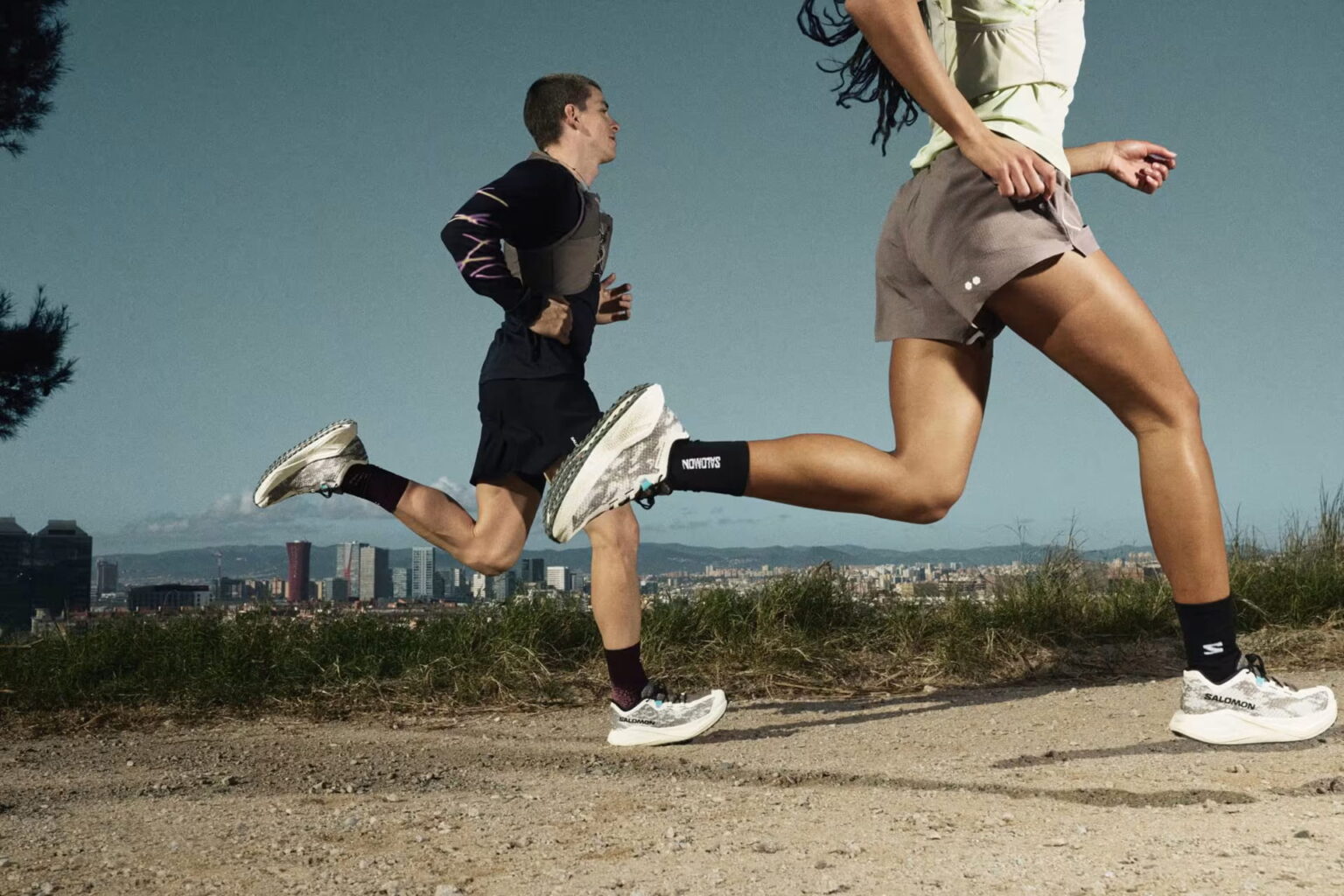
In 2016, a running shoe mold nearly ended up in an incinerator. It belonged to Salomon’s XT-6, a trail running shoe designed for ultralong distances in punishing conditions. Jean-Philippe Lalonde, a Frenchman who had worked on Arc’teryx’s high-end fashion line, saved it.
Lalonde saw potential in the shoe. Replacing its race-inspired red, black, and white colorway with muted tones or athletic colors could give it a much wider appeal. From that salvaged mold, he gradually built Salomon’s Sportstyle line, which became a defining part of the brand.
By 2023, the XT-6 had crossed generations. Scott Mellin, then Salomon’s chief brand officer, heard from a Paris multibrand boutique that young men were wearing pairs passed down from their fathers.
In a few years, the brand from Annecy, France, gained a much wider global audience. Revenue rose 29% year-on-year in 2025 to more than USD 2 billion, double its 2022 level. Footwear accounted for nearly 70% of the total.
Founded in the Alps in 1947 as a ski brand, Salomon is now known to many consumers through the XT-6 and the collaborations and everyday models that followed it.
Gorpcore helped persuade people who neither ski nor hike to wear XT-6s. The post-pandemic fashion trend brought outdoor performance gear into everyday wardrobes, combining function and technical design with a mountain-inspired aesthetic.
But Salomon global CEO Guillaume Meyzenq believes that wave has now run its course.
“Gorpcore is over,” he told 36Kr.
For a brand that benefited from the trend, declaring it over might seem risky. Meyzenq argues that Salomon’s appeal now rests on something more durable.
“We don’t have two separate stories. Sportstyle and performance aren’t disconnected,” he said. “When people come for the style, what they are buying is still a performance product.”
He sees two changes over the past decade.
“First, the outdoors became a source of inspiration for urban consumers. Suddenly, people wanted to head into the mountains, or simply spend time in nature and experience the atmosphere,” Meyzenq said.
“They began searching for brands that could offer genuine outdoor technology. […] So gorpcore has passed, but that didn’t happen by accident. It happened because people’s attitudes toward urban life changed completely.”
His argument turns on the distinction between appearance and function. A boom driven purely by aesthetics would leave Salomon exposed when tastes changed. Demand for the XT-6’s outdoor performance could give it more staying power.
That thinking has led Salomon to focus more this year on apparel and running across a wider range of outdoor settings.
Meyzenq told 36Kr that at least half the floor space in the brand’s new, larger stores will be devoted to apparel. Products are being released around training seasons. Falcon Fly, Salomon’s premium training and racing apparel line, debuted with a winter collection early this year, followed by a spring training range. In June, it introduced a summer collection using ultralight woven fabric made with 7D yarn and outfitted 26 runners at the second S/Pro marathon elite training camp.
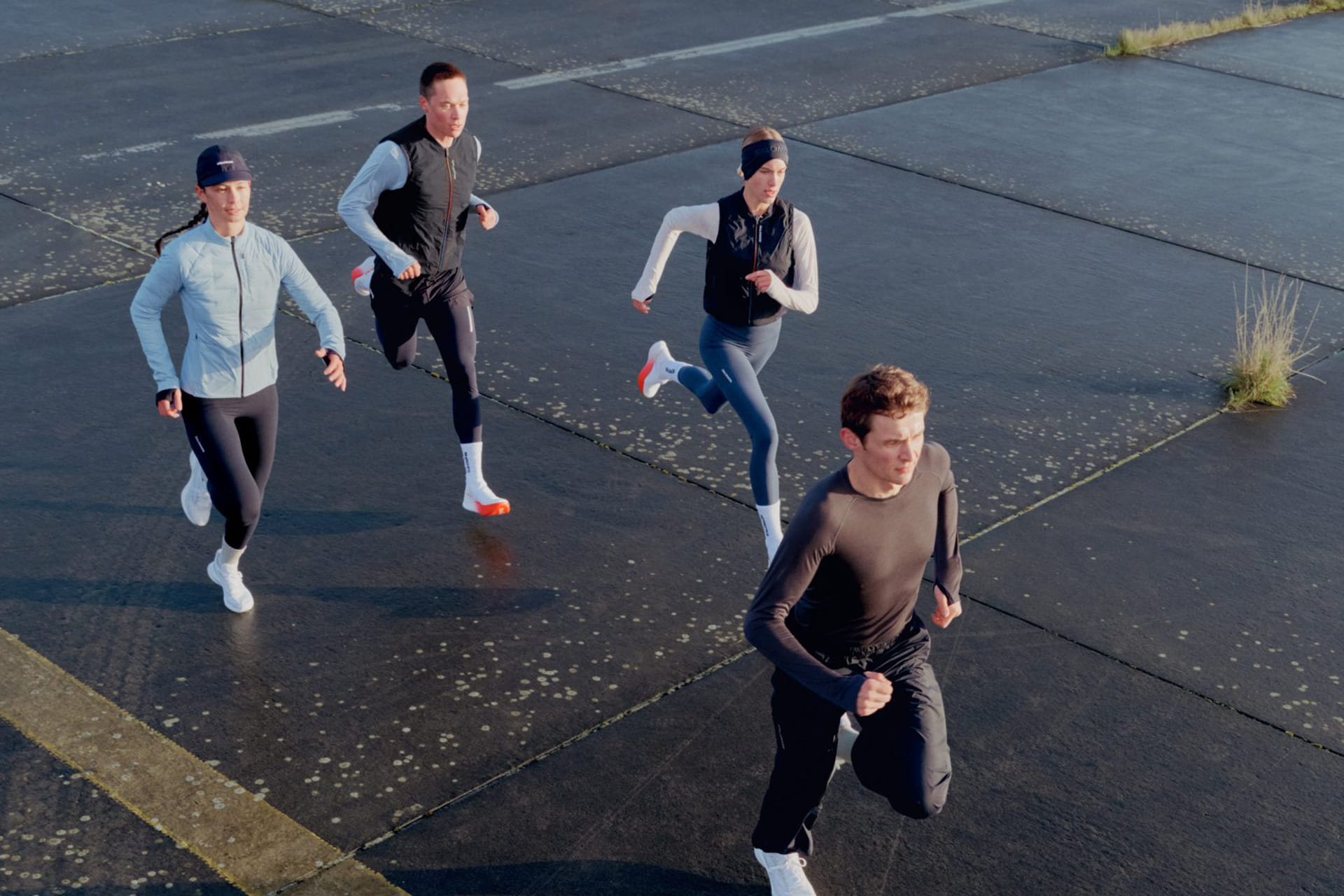
In footwear, Salomon continues to expand its Gravel Running range, which management sees as a way into the broader running market.
Sportstyle remains the brand’s biggest growth driver, according to management, but Salomon is also investing heavily in road and gravel running.
On earnings calls, management has repeatedly outlined its distribution strategy: open a few flagship stores in key cities, then expand the brand’s reach through carefully selected and upgraded wholesale channels.
Salomon began systematically expanding distribution in North America two years ago, accepting short-term pressure on margins. That expansion is beginning to show results. Its network includes outdoor and specialty running retailers such as REI and Fleet Feet, upscale department stores led by Nordstrom, and mass-market retailers such as Foot Locker and JD Sports.
“In Europe, the US, and Japan, the typical model is to open large flagship stores in key cities such as Paris, Tokyo, and New York. Those stores deliver the experience, show the brand’s full range, and tell the best version of its story,” Meyzenq said. “Wholesale distribution then provides scale”
“But China is different. You have to put your best stores in the best locations.”
He paused.
“But storytelling alone isn’t enough. In China, you also need sufficient scale in high-quality physical retail.”
A small flagship network can support expansion in Europe and the US, while China requires a larger store network.
Salomon added a net 13 stores in Greater China in the second quarter, bringing its total to 315 directly operated and partner-operated locations. It is targeting 45 net additions for the full year and believes the market could support 400–500 stores over the long term. The company also claims its athletic footwear stores in Greater China and Asia are the industry’s most efficient and profitable.
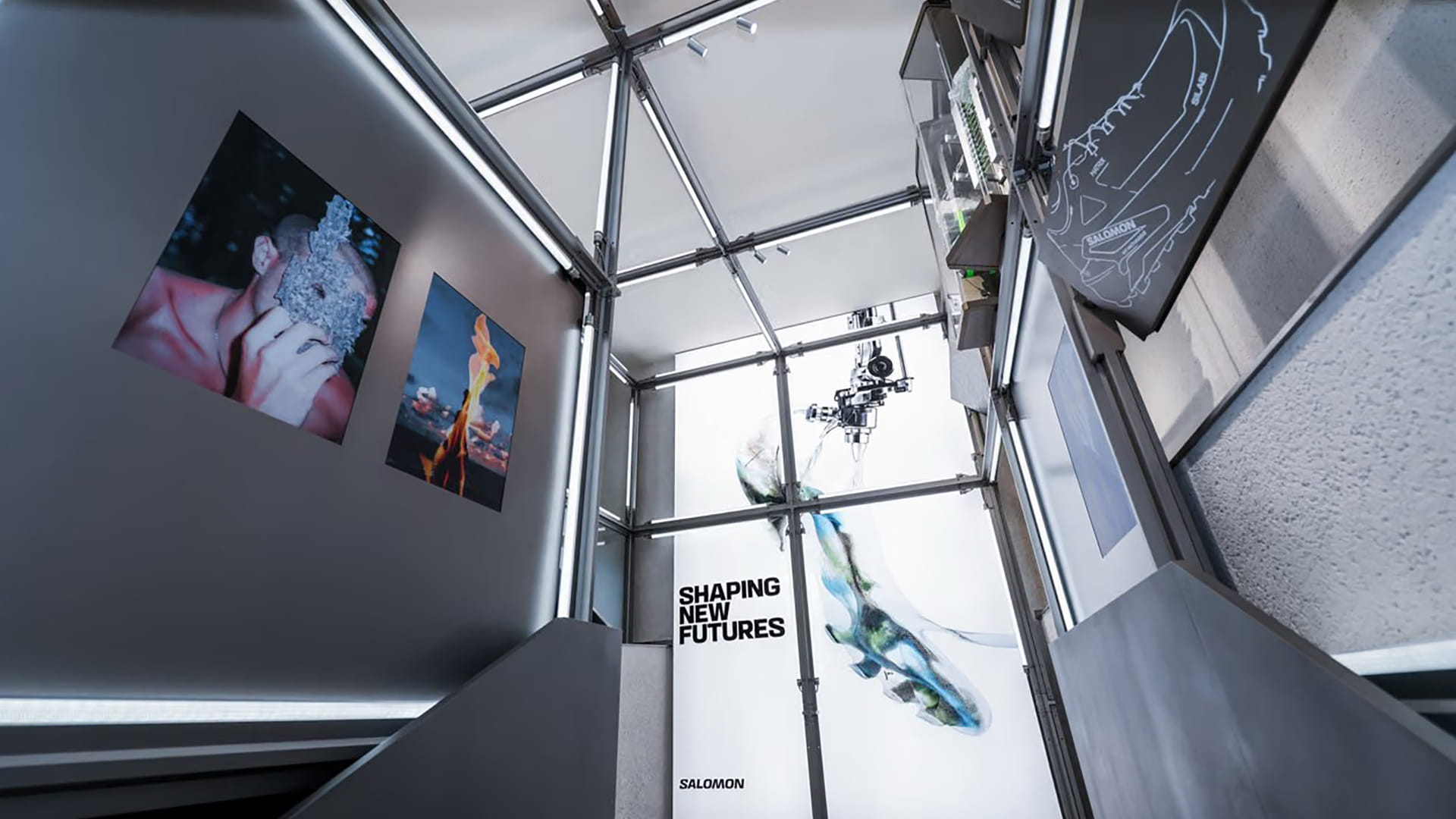
On August 10, Salomon opened its flagship store at China World Mall in Beijing. 36Kr spoke with Meyzenq about outdoor sports, Chinese consumers, and the brand’s past and future.
The following transcript has been edited and consolidated for brevity and clarity.
36Kr: Salomon’s China World Mall flagship store is much larger than previous stores, with a significant portion devoted to apparel. Roughly how much space does apparel occupy?
Guillaume Meyzenq (GM): About 60% of the retail space is used to display apparel.
In the past, our stores were usually 200–250 square meters and focused mostly on footwear. Shoes offer an advantage in efficiency: you put up a wall and display them.
Apparel has more product variants and needs more space for visual merchandising to show the breadth of the assortment.
Last year, we decided to expand the apparel line further. That meant opening new stores, but also renovating and enlarging some existing ones.
These larger stores are the next generation we have developed to upgrade our apparel business. On average, apparel can occupy about 50% of their display space.
Salomon currently has 315 stores in China, and we will continue to concentrate on first- and second-tier cities.
36Kr: How do apparel’s prices, uses, and target customers differ from footwear’s?
GM: The people buying the clothes are the same people buying the shoes.
Salomon’s products fall primarily into two groups: Performance and Sportstyle. Both follow the same approach rooted in the mountains. They are not disconnected from one another.
Our sports categories include skiing, outdoor sports, trail running, road running, and gravel running. Footwear is designed around the functional demands of those sports, and apparel follows exactly the same approach. There isn’t a separate story.
When consumers enter Salomon’s ecosystem, we can offer a complete solution covering footwear, apparel, and gear. Sportstyle complements and fits alongside our sports categories.
Bringing footwear and apparel together is one expression of Salomon’s transformation from a mountain sports equipment brand into a brand representing contemporary mountain sports culture.
36Kr: Beyond apparel, your other major initiative is running shoes. China lacks the specialized store network found in Europe and the US. How do you plan to build the running business here?
GM: 25 years ago, we concluded that trail running would become a sport in its own right. It was very small at the time. There were only a handful of races worldwide, but we believed it would become a source of inspiration for consumers.
That is why Salomon kept investing in R&D for its S/Lab trail products.
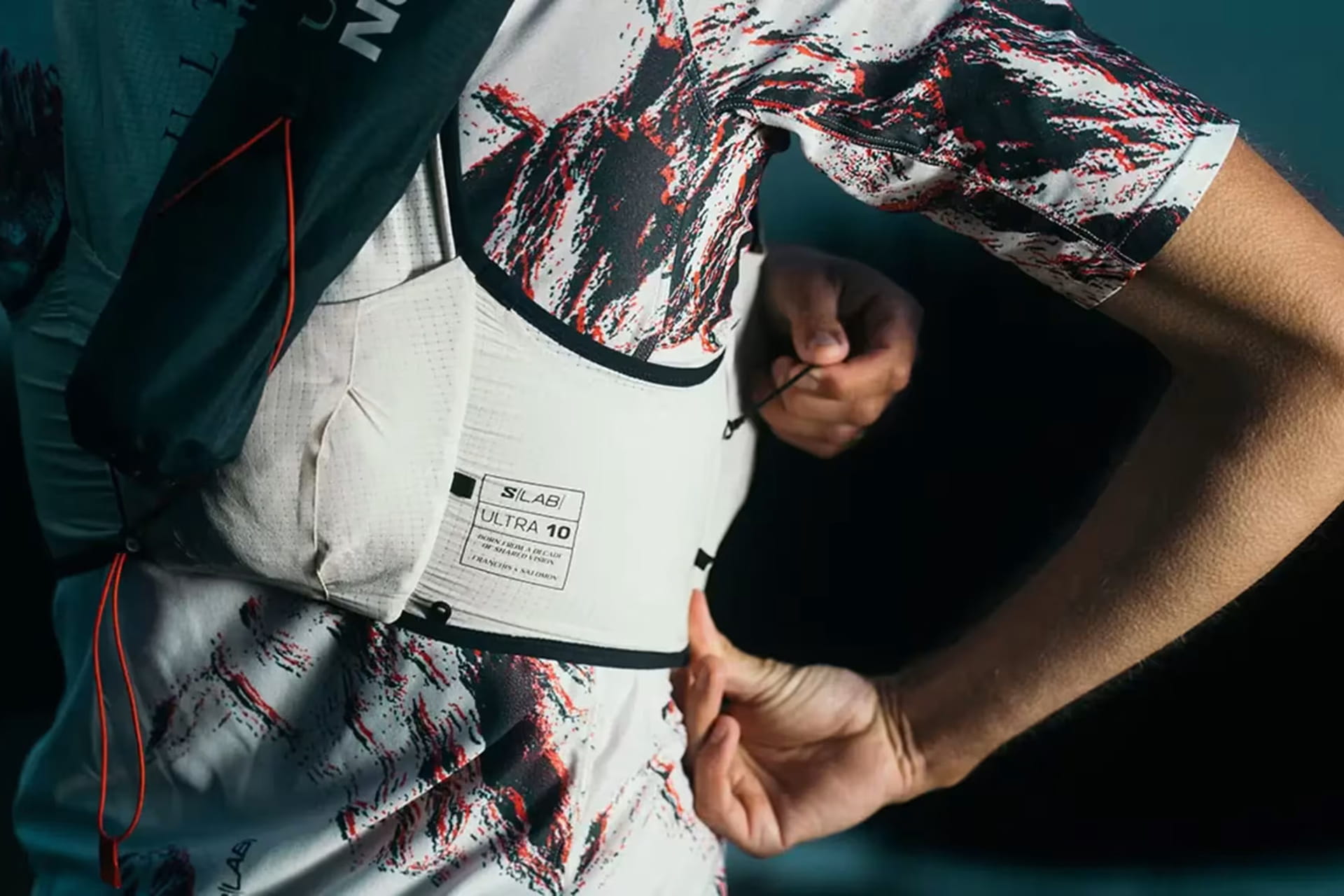
In 2009, we helped pioneer the hydration vest trend. At one point, almost every trail running hydration vest on the market had essentially been developed in our laboratory in France.
We created customized fits for athletes and refined hydration packs into vest-style designs that fit closer to the body. We preserved their functionality and practicality while making them lighter, which is what trail runners care about most.
Today, hydration vests have even moved beyond trail running and become part of gorpcore fashion.
The new GRVL multi-terrain running series has expanded our running business and is attracting growing attention in the specialty running market in North America, Europe, the Middle East, and Asia.
Even in China, where Sportstyle had previously dominated, technical performance products are beginning to gain ground. In the first half of 2026, GRVL’s share of sales rose significantly both in China and globally.
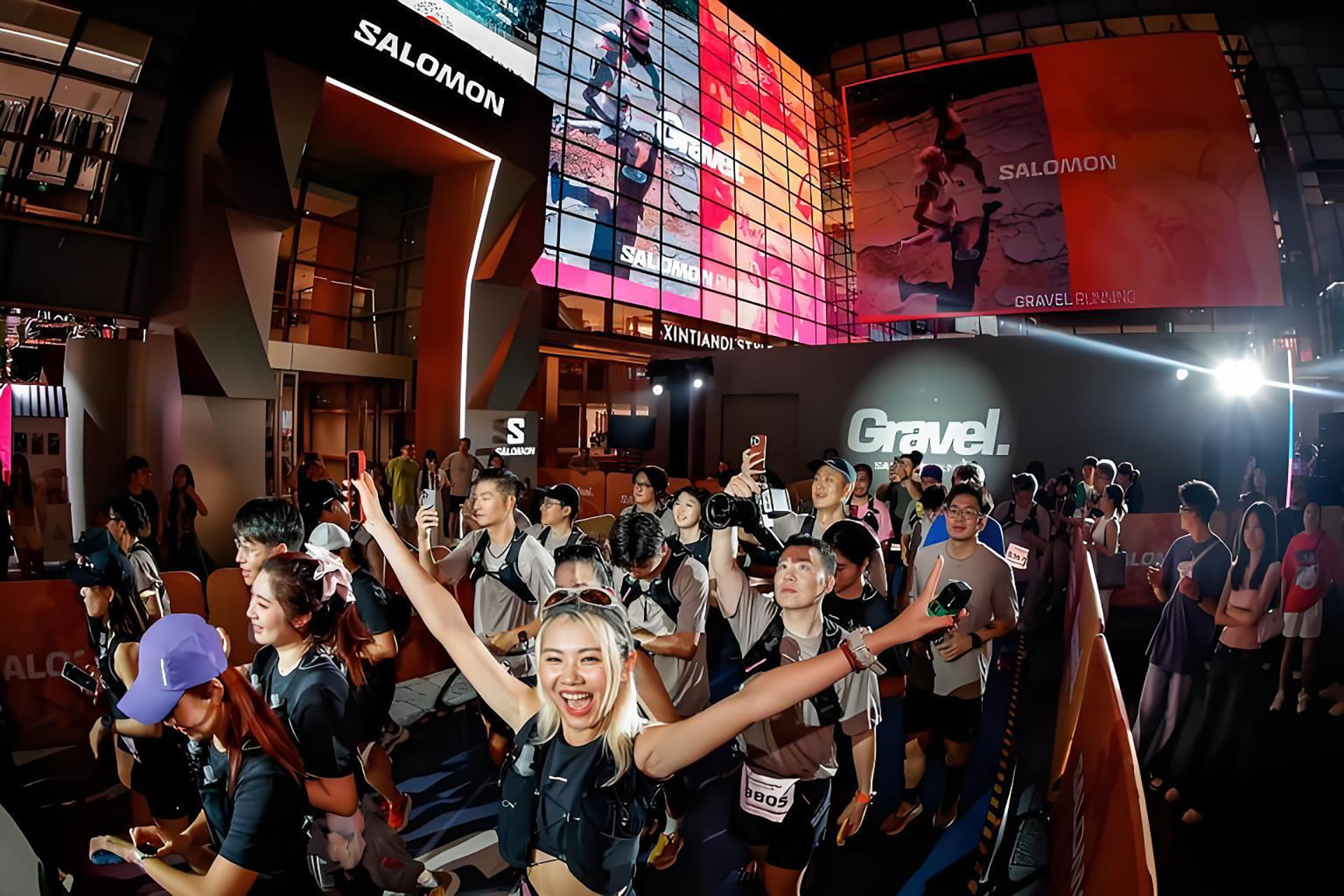
What is special about running is that it is community-driven. One part of our strategy is to participate in major, top-tier events such as the Shanghai Marathon, where we can interact directly with runners at the professional expo and on the course. The other is to use our stores and coaches to build running communities around our consumers.
Running may look like an individual sport, but the younger generation wants to run as part of a community. We are doing this in both Europe and China.
In short, our direction in China is to develop road and trail running in parallel. Our goal in this category is to become a premium running brand.
We start with recreational runners and consumer communities, then use the “Go Wild” community to provide more advanced training and help road runners expand into trail running.
36Kr: Salomon’s relationship with athletes is said to differ from that of other sports brands. Can you explain?
GM: Globally, we have an elite athlete team called Team Salomon, and Chinese athletes are an important part of it.
Within this system, athletes can choose a path based on their own development. They can focus primarily on international competition, or stay in China and compete in top domestic races.
We also have a program specifically designed to identify and support promising newcomers. We provide financial support, customized equipment, and professional training so they can focus more closely on their development, improve their athletic abilities, and contribute to the sport’s growth.
Whether in the US, China, or France, our model for working with athletes is consistent globally. We provide them with a comprehensive, 360-degree professional support system.
36Kr: Skiing and trail running are still developing in China. Why do you believe a brand can encourage people to take up sports rather than simply dress the part?
GM: Five years ago, we decided to focus on changing how Chinese consumers think about the outdoors and how they live.
At the time, Salomon’s core consumer base was fewer than 100,000 people. Today, it is close to ten million. That is a 100-fold expansion in five years.
We reached them through communities, events, and Go Wild trail races.
Through our training programs, community managers, and key opinion leaders, people in the broader outdoor community can develop into semiprofessional trail runners or hikers.
Once these elements form an ecosystem, Salomon’s job is no longer simply to build it. We need to give it enough depth.
The number of participants forms the foundation. Races and activities give it depth. Together, they create a cycle.
Let me give you another example. There is an Olympic discipline called ski cross. Four people start at the top of a slope at the same time, and the first one to the bottom wins.
Salomon helped push this sport forward. We designed dedicated skis for it and created a race series. The International Ski and Snowboard Federation later adopted it, and it became an Olympic event.
So what we do goes far beyond manufacturing ski equipment.
In China, skiing is still small, but trail running already has 800 races. Ten years ago, there may have been only 10–20.
We sponsor races, support elite athletes, and stage the Golden Trail World Series globally.
Because trail running also has a higher technical barrier to entry, we have established academies for running training and education to help more people understand the sport and take part.
Trail running in the mountains is different from running a marathon, even though both are running. You need to learn how to deal with temperature changes caused by altitude, how to run at night, and so on.
We are very determined to turn this sport into a culture rather than a passing trend. Culture lasts.
36Kr: You have said gorpcore is officially over, even though it was once a major driver for the brand. What is driving Salomon now?
GM: We don’t have two separate stories. Sportstyle and performance are not disconnected.
When people come for the style, what they are buying is still a product designed for athletic performance.
I say gorpcore is over because two things have happened over the past decade.
First, the outdoors became a source of inspiration for urban consumers. Suddenly, people wanted to head into the mountains, or simply spend time in nature and experience the atmosphere.
Second, people in cities began looking for technical functionality. They began searching for brands that could offer genuine outdoor technology.
So gorpcore has passed, but that didn’t happen by accident. It happened because people’s attitudes toward urban life changed completely.
People want to stay active in everyday life. For example, they wear electronic devices to track how much they walk and often feel that if they haven’t reached 10,000 steps, it hasn’t been a good day. Gradually, people want to get outside more, spend more time outdoors, and do a wider variety of activities.
In that context, the functional qualities of footwear and clothing become extremely important.
An XT-6 is much more adaptable and comfortable for those purposes than a sneaker derived from tennis, skateboarding, or basketball, because the XT-6 was designed for that kind of use in the first place.
Is that a trend? I don’t know.
I think the outdoors will always remain a niche market. But whatever the next trend may be, people will continue to value technical expertise and functionality.
Consumers increasingly understand what they want. No matter how trends change, there will still be space in their shoe closets for athletic shoes.
So my view is that trends may change, but functionality will endure as a long-term source of value.
36Kr: Many sports brands are exploring niche categories in China. A niche can be a strong selling point, but it can also encourage consumers to move between brands, weakening loyalty. How do you see that?
GM: First of all, we can still consider ourselves a niche brand. Winter sports, outdoor footwear, and trail running are all niche markets.
The biggest difference between us and other brands is scale.
For younger consumers in these specialized categories, expertise matters. If a brand stays committed to a niche sport and keeps innovating for it, its expertise becomes firmly established.
Salomon comes from the Alps, one of the best regions in the world for mountain sports. We have a genuine story about the development of mountain sports to tell.
At the same time, we offer solutions to specific problems in mountain sports that are functionally advanced and stylistically distinctive. That is what consumers genuinely care about today: robust quality, technical foundations, and authentic stories.
There are indeed many niche brands, but Salomon is one of the leading ones. We can engage with a broader group of consumers while retaining our expertise. That is one of our strengths.
36Kr: In January, Salomon appointed its first creative director, Heikki Salonen. He described the brand’s character as “nerdy” and “weird.” Do you agree?
GM: I think Salomon’s secret is design shaped by performance.
Our shoes look the way they do by design. There is a clear performance need and purpose behind them. Our color teams, material and innovation teams, and athletes develop and test them together. Every line and function on the product has a purpose. They are not something a designer simply created out of thin air.
What Salonen said is really an interpretation of our philosophy.
If a technology improves a product’s performance, Salomon does not deliberately try to hide it.
Technologies such as Quicklace, SensiFit, and Contagrip are all used across both our performance and Sportstyle products. You can read the performance DNA directly in the design.
That performance-driven approach to design is exactly what I mean when I talk about the authenticity and value consumers are looking for.
36Kr: China is Salomon’s fastest-growing market, and Sportstyle is its fastest-growing segment there. How is the performance business growing?
GM: Both have contributed significantly to our growth in China, and the performance business in particular is growing very quickly.
In fact, Salomon is growing rapidly across all regions.
China was the first market to really take off. Now Asia Pacific and North America are also performing very well.
Europe is a larger market, so its growth rate is naturally different, but it is also delivering solid growth.
The reason is what we have been discussing. We started as a niche brand providing performance equipment, then brought a modern mountain sports lifestyle into cities. Our market share is small and our brand awareness is moderate, but we are sufficiently technical and distinctive. We are creating a new culture.
At the end of the day, we are still a midsize company, which means there is enormous room for growth.
36Kr: What is the biggest difference between China’s retail environment and those of Europe and the US?
GM: China is different because it is primarily a direct-to-consumer market. There are only two ways to reach consumers: retail stores or e-commerce platforms.
That means telling the right story is important, but we also need the ability to operate retail at scale.
In Europe, the US, and Japan, the typical model is to open large flagship stores in key cities such as Paris, Tokyo, and New York. Those stores deliver the experience, show the brand’s full range, and tell the best version of its story. Wholesale distribution then provides scale.
China is different. You have to put your best stores in the best locations. One example is the China World Mall flagship store in Beijing that opened in August, where more than 700 square meters of space has been turned into a platform for brand storytelling.
But storytelling alone isn’t enough. In China, you also need sufficient scale in high-quality physical retail. That demands an entirely different organizational structure and set of capabilities from the brand.
As a result, we need to put retail at the center, communicate closely with landlords, and adapt store formats to different retail environments.
36Kr: Based on your observations, what is distinctive about Chinese consumers?
GM: Chinese consumers are looking for expertise and authenticity, distinctive brand stories, new solutions, and better quality.
Salomon’s advantage is precisely that we have always been driven by community and innovation. We don’t think the consumer journey begins when someone enters a store. It begins with the brand’s digital platforms and with what consumers wear in everyday life.
The store provides services that carry the brand story forward: customization, workshops, sports communities, invitation-only purchasing opportunities, member days, and other services.
No matter how beautiful the store or how good the equipment inside it, it is still only one endpoint.
We need an approach that covers the entire consumer journey. At the same time, the brand story and ethos come from the French Alps and remain consistent globally.
In China, however, we need to adapt to local conditions and understand the country’s digital ecosystem and consumer behavior.
As China enters a new phase of importance for Salomon, the strategies and experience we have developed here are also beginning to influence the brand’s global development.
36Kr: You have interacted with other businesses across Amer Sports and Anta Sports. Can you share one lesson that has helped Salomon?
GM: We have learned several things.
The first is an investment-driven growth mindset: make the right investments and achieve results. That way of thinking may not have existed under Salomon’s previous shareholders.
The second is talent. Look at how much impact experienced new people can have on an organization.
The third is an obsession with detail and perfection that is deeply rooted in corporate culture.
You can see the pursuit of premium quality and precision in the China World Mall flagship store. That is something we have absorbed and learned from our exchanges with Anta.
The fourth point is equally important.
Anta genuinely respects the expertise of each individual brand. That allows the things that make a brand unique to come through more clearly. It also means the brand’s authenticity and innovation processes are respected.
36Kr: Salonen has said Salomon is like an onion: peel away one layer and you find another meaning beneath it. Which layer are you at now?
GM: I believe modern mountain sports will continue to be a major driver of the sports industry.
Some sports have strict rules and are very structured, almost academic, and they are also a source of inspiration for many people. The World Cup just ended, and a lot of people were watching.
But consumers will continue to pursue healthier living, genuine enjoyment of sports, and time outdoors, regardless of age.
If we do things well and continue to support these sports and communities, Salomon will ultimately move beyond temporary fashion trends.
In this era, outdoor sports can become a way of life. And just as Salomon has helped advance individual sports in the past, it is also an important driver of that lifestyle today.
36Kr: So lifestyle is the answer?
GM: The answer is life itself. People are beginning to take ownership of their own health. They want to move and make physical activity part of their everyday lives.
For us, the true sign of success will be this: when consumers decide to embrace a more active, healthier way of life, Salomon is one of the first brands that comes to mind.
KrASIA features translated and adapted content that was originally published by 36Kr. This article was written by He Zhexin for 36Kr.