

Lao Zhou (pseudonym) still finds it hard to believe. This time last year, he was camped out near Nio’s offices, pressing for payment every day. “My boss was terrified it would go under.” Now, with monthly shipments to Nio running at 20,000–30,000 sets, the automaker has become one of his company’s biggest customers.
Stories like Lao Zhou’s are common across Nio’s supply chain.
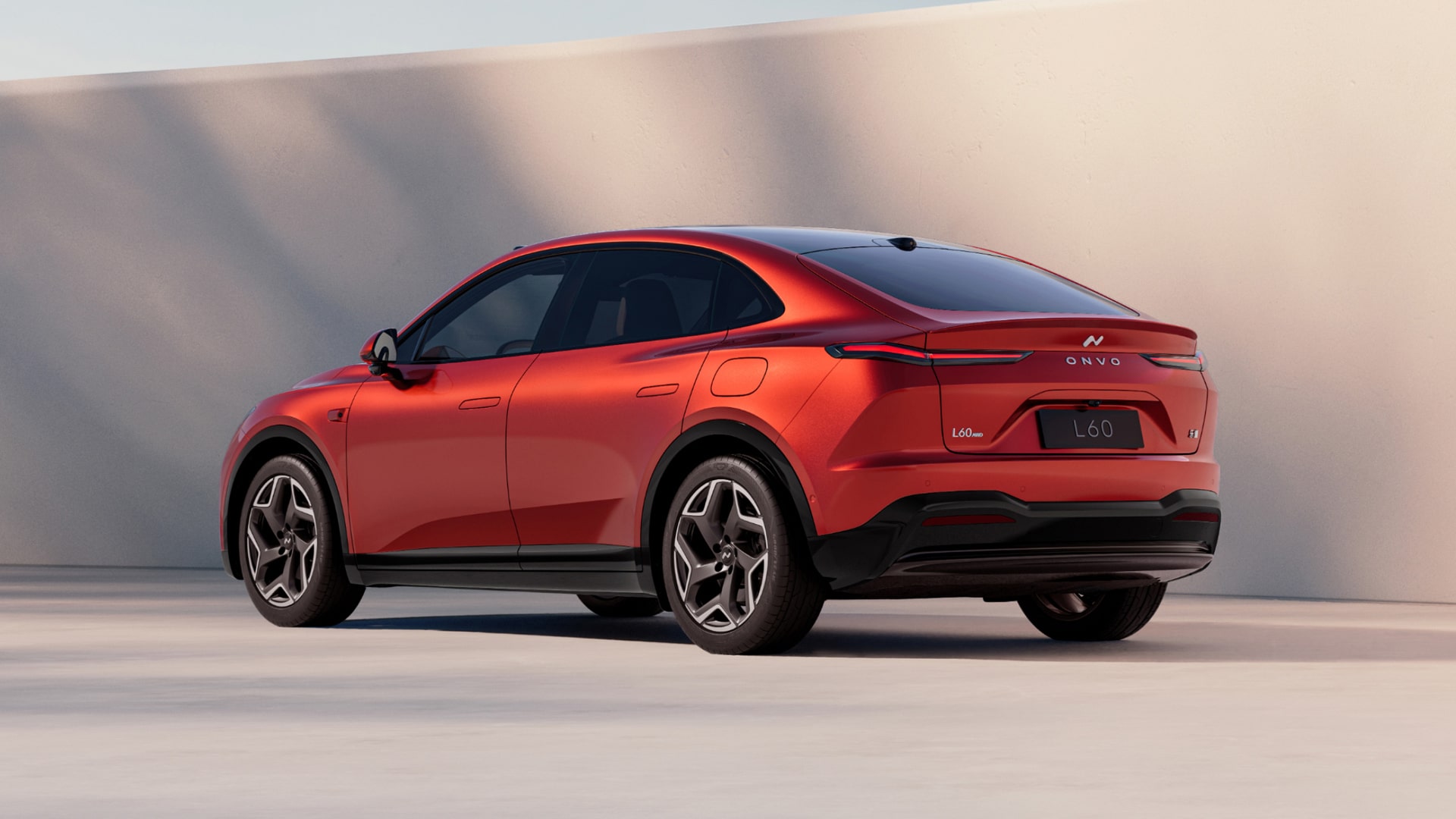
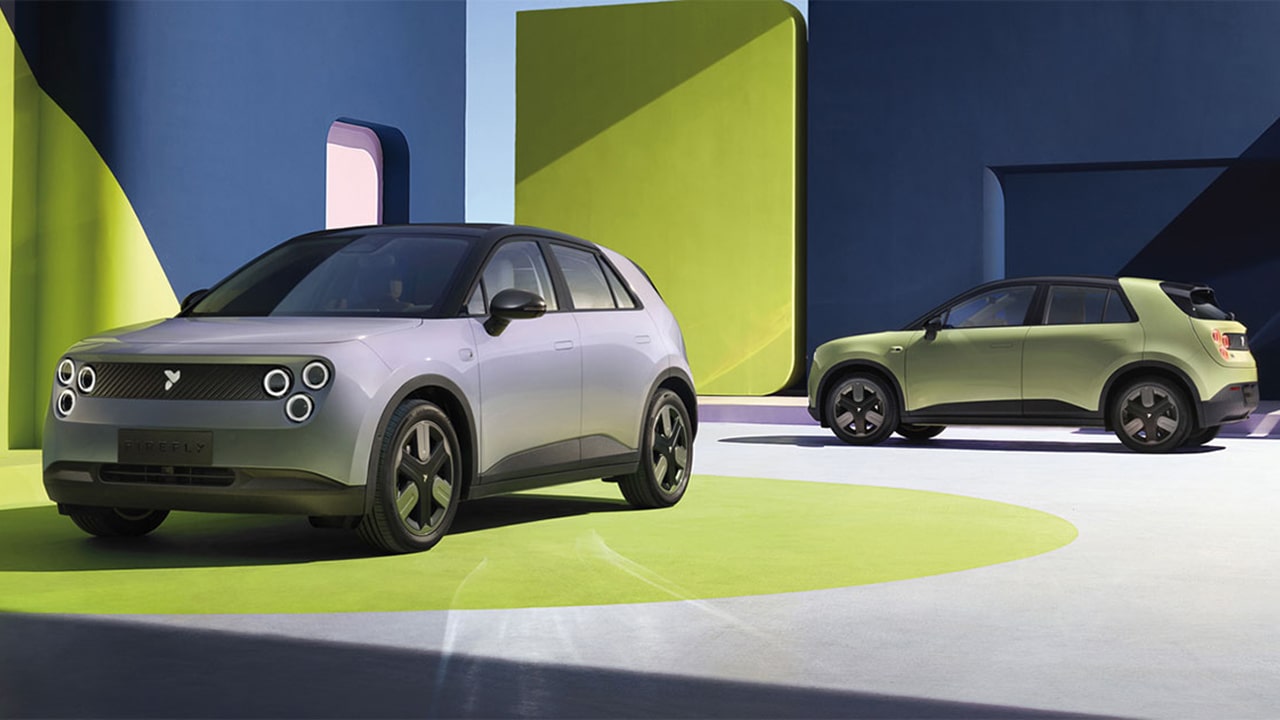
An interior supplier told 36Kr that last year, fearing Nio might collapse, it had pushed the company to settle its tooling bill. Short of cash, Nio ultimately paid the debt with dozens of Firefly cars and some Onvo L60 and Nio ES6 vehicles. Other suppliers tried to avoid its business altogether, quoting prohibitively high prices when it approached them.
Their fears were not unfounded. Public figures put Nio’s cumulative losses over the past decade at roughly RMB 100 billion (USD 14.9 billion). As recently as the middle of last year, it was still reporting a quarterly loss of RMB 5 billion (USD 744.8 million). After Jiyue and Neta collapsed in succession, speculation about the next carmaker to fail turned to Nio.
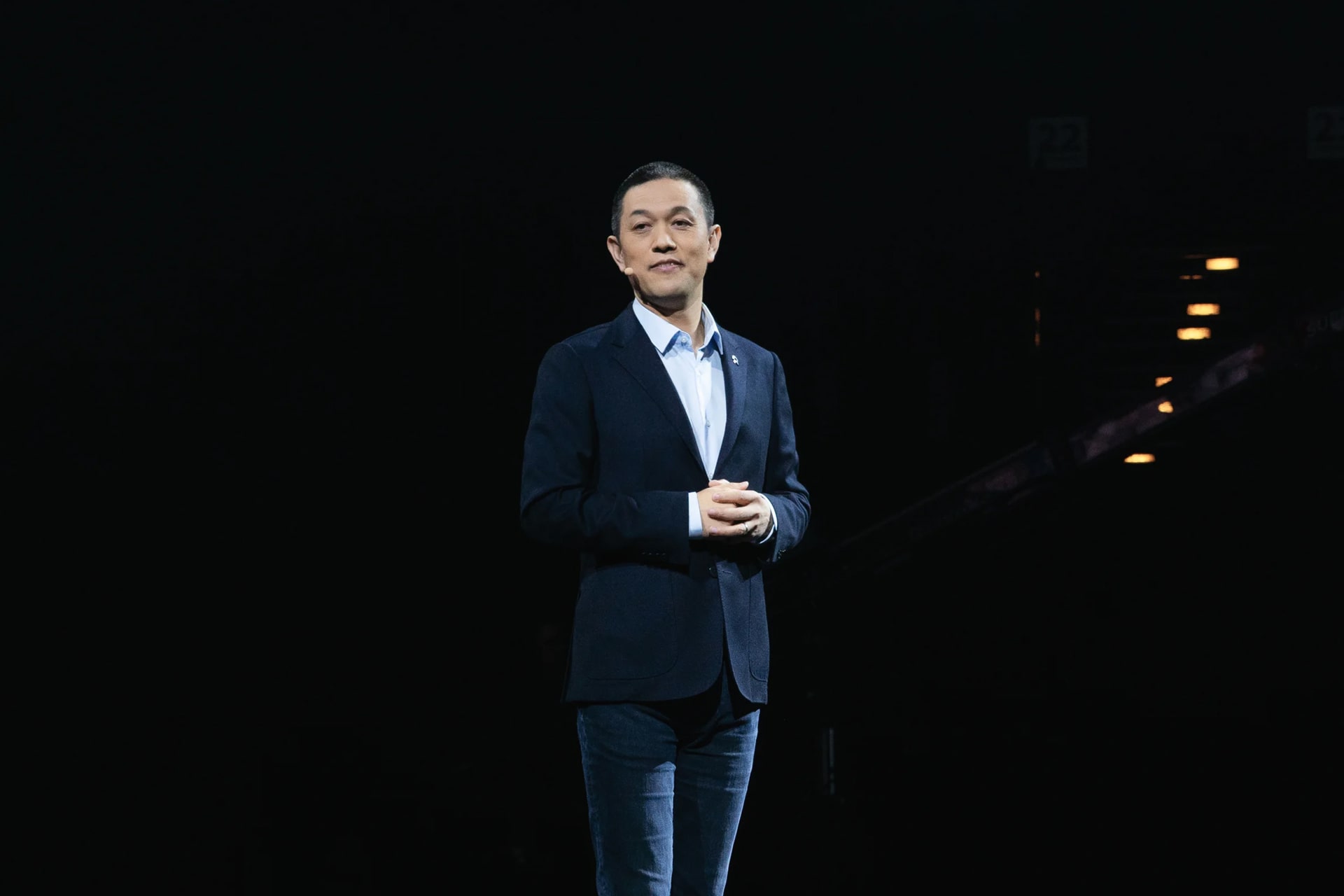
Even founder William Li said he thought fewer than 1% of people believed Nio could turn a profit.
Nio has since begun to prove those doubts wrong. On September 1, Nio released its latest quarterly results, reporting a profit of RMB 26.1 million (USD 3.9 million) on a non-GAAP basis. That marked its third consecutive quarter of non-GAAP profit, beginning in the fourth quarter of last year, despite a weakening automotive market.
RELATED ARTICLE
Rising prices for memory chips, batteries, and other components since the first half of the year have increased costs. Meanwhile, reduced subsidies have also weakened demand. According to the China Passenger Car Association, domestic passenger car sales fell about 20% year-on-year in the first half.
Even former strong performers such as Seres and Li Auto have slipped from profit into loss, making Nio’s improvement unusual.
The change is striking against Nio’s own record: a business that had been losing RMB 20 billion (USD 3 billion) annually is now reporting quarterly profits on a non-GAAP basis.
“[William Li] always finds a way out when all seems lost,” a longtime Nio employee told 36Kr. Over the past few years, mounting losses have repeatedly pushed Nio to the brink. Each time, Li found substantial fresh funding outside the company to pull it back. Nio kept circling through “expansion, crisis, fundraising, expansion.”
This time, Li looked within the company. He reworked its product strategy, tightened spending, scrutinized operations, and took a firmer hand in supply chain decisions. The overhaul helped Nio reach non-GAAP profitability.
The financial reversal took shape over a year, but the product changes behind it had been four years in the making.
Letting go of old convictions
“If you want to put in a big screen, go work at Li Auto.” A former Nio executive recalled Li snapping at an employee who proposed one at an early product meeting.
Years later, models such as the all-new Nio ES8, ES9, and Onvo L90 would be jokingly described online as Li Auto cars with battery swapping. They share several selling points: large bodies, roomy interiors, and abundant features. Nio has adopted the refrigerators, televisions, and sofa-like seats that Li Auto helped popularize.
“The ES8 has plenty of room. It doesn’t feel cramped when the whole family rides in it,” said one recent buyer. And while the second-generation ES8 cost RMB 500,000–600,000 (USD 74,500–89,400), the third generation costs a little over RMB 400,000 (USD 59,600). To him, it is “very good value.”
The changes quickly translated into sales. After the improved products arrived last August, Nio’s monthly sales rose to nearly 50,000 vehicles at one point, double the year-earlier level. Its large ES8 SUV became the bestselling new energy vehicle priced above RMB 400,000 in some months. Even as the market cooled this year, monthly sales held at around 30,000.
Previously, Nio’s cars had combined large exteriors with cramped interiors, short driving ranges, and poor value. Several deeply held design convictions had put the company out of step with mainstream customers.
Cabin screens were one example. Li, who studied sociology at Peking University, had said publicly and internally that he preferred his children not to spend car journeys looking at multiple screens. Before 2025, Nio’s cars had only a single, vertically mounted center display.
Instead of installing large screens, Nio promoted augmented reality (AR) glasses that owners could wear to watch shows in the car.
One employee recalled Li presenting a series of arguments internally to justify the decision, citing augmented reality glasses’ market share, user experience, cost, and portability as evidence that they would replace in-car screens. But subsequent developments showed that the entire AR glasses industry was still in its infancy. “It was a classic case of making another bad decision to make up for the first one.”
“Big on the outside, small on the inside” was another persistent criticism. It reflected the costs of Nio’s commitment to putting design first.
Design is central to Nio’s brand, and its designers wield considerable influence. But carefully proportioned styling can clash with efficient use of interior space. Early Nio vehicles struggled to reconcile the two.
A Nio employee told 36Kr that the original plan for the second-generation flagship ES8 used a reference occupant height of 1.8 meters and allowed three fists’ worth of space in the second row. That would keep passengers’ feet from getting wedged in when the front passenger seat’s leg rest was raised.
Designers rejected the proposal, arguing that a longer wheelbase and body would make the car look less refined. The resulting third row was uncomfortable, and the lack of a front trunk further limited storage.
The short wheelbase and large, 22-inch wheels also prevented the second-row seats from reclining fully. The problem reportedly contributed to the departure of the person responsible for the seats.
Designing for Europe imposed another constraint. Nio’s second-generation ET5 is a sporty sedan aimed at the Tesla Model 3. While the similarly positioned Xiaomi SU7 still sells close to 20,000 units a month, the ET5’s sales have remained weak.
A person at Nio told 36Kr that one of its biggest shortcomings was that “the front compartment is too short.” “This car was developed with European market needs very much in mind. The BMW 3 series and Mercedes-Benz C-class, which the ET5 was benchmarked against, aren’t stretched in Europe.”
Those early product convictions became obstacles to meeting mainstream demand in China. Rivals used spacious interiors, refrigerators, televisions, and sofa-like seats to push individual models to monthly sales of 10,000 vehicles. Nio’s similarly positioned ES8 spent years hovering around 1,000.
Even later entrants from outside traditional carmaking, such as Aito and Xiaomi, were approaching monthly sales of 30,000 vehicles. Nio, with more than ten models, was still struggling to reach 20,000.
Nio’s heavy investment in its second-generation NT2 platform had failed to produce a hit. According to 36Kr, Li and senior executives held a series of product reviews in the second half of 2022, shortly after deliveries began on the platform, to understand why the cars had fallen short.
A former Nio executive told 36Kr that the reviews reached a shared conclusion: the products were out of touch with customers and the market.
Li still hesitated over large screens when planning the third-generation platform. An employee close to him said he wrestled with the issue for a long time before compromising. The third-generation flagship ES8 SUV has five or six screens.
Nio also enlarged the cars and their interiors and added refrigerators and multiple sofa-like “zero-gravity” seats. Together, those changes helped the new generation attract more buyers.
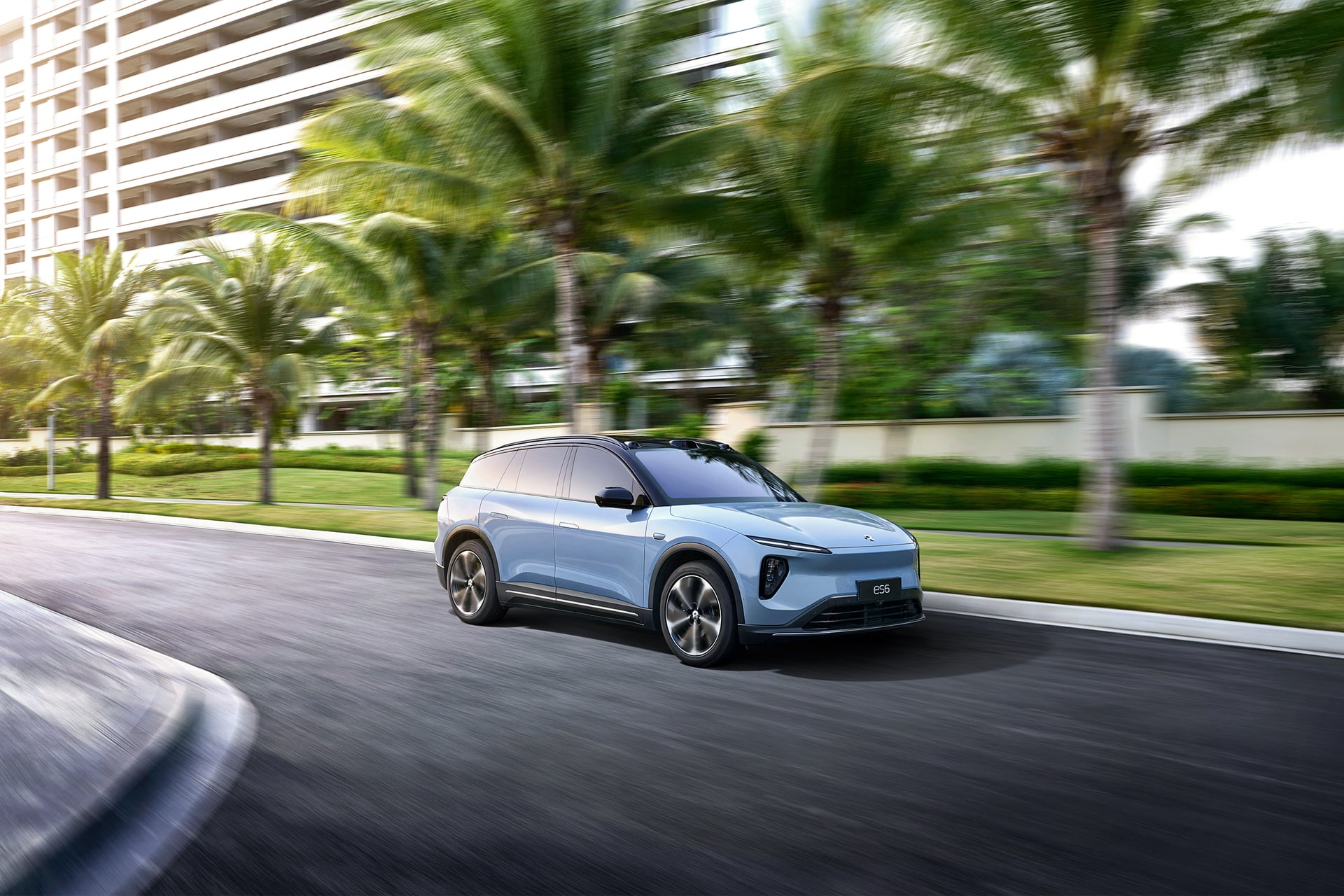
On September 20, 2025, the third-generation ES8 launched. Its more ambitious body dimensions and wheelbase, combined with large front and rear trunks, gave Li the confidence to proclaim at the launch that it was a ready alternative to an MPV.
Another person at Nio told 36Kr that the third-generation ES6 had originally been scheduled for release in 2026. But last year, an internal assessment found that the planned vehicle was not competitive enough. With a five-seat ES8 already due this year, Nio pushed the launch back to 2027.
With competition intensifying, Nio would rather delay the car by a year to make it larger and add features such as zero-gravity seats.
The shift toward larger cars extends to the ET5, a sporty sedan originally built around individual expression.
According to 36Kr, Nio plans to lengthen the third-generation ET5’s body and wheelbase. Next year’s model is expected to offer substantially more rear-seat room, retaining its sporty focus while better accommodating families.
The deeper change concerns how Nio defines its products. One person at the company said it had previously benchmarked cars against Mercedes-Benz and BMW without thinking enough about its intended buyers.
Nio now reportedly studies successful models and customers’ needs more closely. When planning its third-generation cars, it grouped buyers by intended use, whether personal, business, or family, and developed vehicles accordingly.
Those changes coincided with growing adoption of battery electric vehicles, helping Nio’s third-generation models.
Better charging and battery swapping infrastructure, along with the spread of ultrafast charging, has rapidly eased drivers’ concerns about replenishing their batteries and helped drive strong growth in battery EV sales. China Passenger Car Association data shows that those sales rose more than 24% year-on-year in 2025, outpacing the overall new energy vehicle market and the plug-in hybrid segment, which includes extended-range vehicles.
Rising oil prices have added momentum this year. An executive at one carmaker told 36Kr that an unexpected halving of its gasoline vehicle sales in the first half had caught the company off guard.
Nio’s revised product lineup put it in a better position to benefit from that market shift.
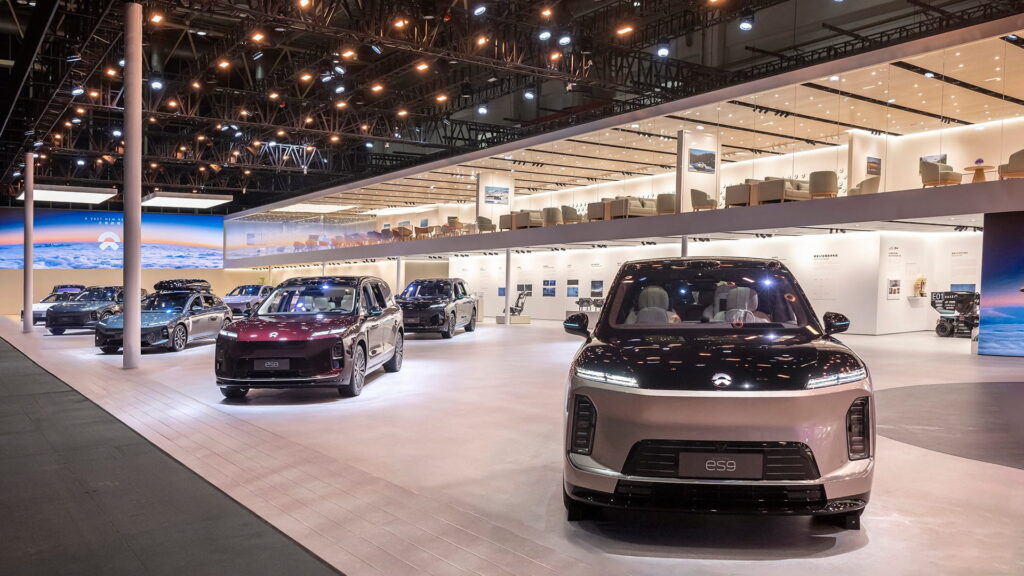
On August 21, Li shared on WeChat that the third-generation ES8 delivered its 140,000th vehicle. The latest flagship SUV, the ES9, had also surpassed 20,000 cumulative deliveries just 73 days after deliveries began.
Alongside the product changes, Nio was looking for revenue and savings across the company.
Selling services and technology to other businesses
At an internal meeting last year, Li said:
“Every sum of money, every position, every project, and every investment in fixed assets has to have someone paying for it. Either you earn money outside the company, or you earn it inside.”
Nio’s search for outside revenue extended beyond cars. It began selling staff services and automotive components to other businesses.
“These days, [William Li] will fight for any business worth more than RMB 2 million (USD 298,000),” a Nio manager told 36Kr.
“Lots of employees have outsourcing projects on the go.” One employee gave 36Kr some examples. Early in the year, someone had traveled to Europe to help a supplier bid for a contract with an overseas vehicle manufacturer. If successful, “it could bring Nio a few million RMB.”
Others were developing an app for China Mobile. “It would probably bring in only RMB 700,000–800,000 (USD 104,000–119,000), but Li still thinks that’s money.” Nio viewed that revenue as pure profit because it had already paid the labor costs.
Beyond selling its employees’ services, Nio also sells technology. In fact, “it wants to sell every kind of technology it has.”
Among its many technology businesses, chips have brought in substantial revenue.
Nio’s chip subsidiary, GeniTech, has begun supplying external customers. According to 36Kr, Nio’s Shenji chips have been selected for an edge inference project in Hefei.
Last year, GeniTech formed a joint venture, Chuangyuan Zhihang, with Axera Semiconductor and OmniVision Group. A source close to Axera told 36Kr that supplying its chip technology externally had earned Nio a respectable licensing fee. If chip shipments grow, Chuangyuan Zhihang’s earnings could rise further.
The joint venture’s first driver assistance chip may now enter the supply chain of a leading carmaker. The initial idea is to use two of the joint venture’s chips to develop Level 3 autonomous driving. Several other leading carmakers are also said to be interested in the chip.
Developing its own chips was once among Nio’s biggest drains on cash. At the China EV100 Forum in 2025, Li offered a comparison for the R&D cost of the NX9031: the investment needed to develop that one Shenji chip would have been enough to build 1,000 battery swap stations.
Industry participants estimate that in-house chip development is difficult to make economical below annual sales of two million vehicles. External customers offer Nio a way to spread the R&D costs across more shipments.
Stricter project approvals and closer scrutiny of returns
The search for outside revenue came with closer scrutiny of internal spending.
Nio has faced cash crunches several times in its history, and Li has repeatedly reined in spending to keep it afloat. In the past, however, those cuts tended to be sweeping: laying off staff, closing stores, and eliminating noncore businesses.
Investors now demand sales and profits from EV startups. Nio has cut its workforce from 46,000 to somewhere in the 30,000s, but the savings drive also reaches into day-to-day operations.
At the start of this year, departments were drawing up their cost-cutting plans for 2026. Some employees were left unsure whether to laugh or cry: after exhausting other options, teams began consolidating equipment to save workstation charges.
A Nio employee told 36Kr that its internal operating system, known as CBU, requires the administration department to charge each department for its workstations. “It’s not just employees occupying a desk who incur a charge. If R&D equipment takes up a workstation, that counts too. In the end, people simply consolidated the equipment to free up a few desks, or moved it to workstations in meeting rooms. That could cut the charge by about RMB 100 (USD 14.9) per workstation.”
Nio has also tightened project approvals.
36Kr has learned that in the past, “a project costing a little over RMB 1 million (USD 149,000) might not get much attention from a VP. A project review meeting could approve it.”
A project costing around RMB 700,000 (USD 104,000) now needs a vice president’s approval, while one costing RMB 1 million or more may require Li’s personal signoff.
Even a RMB 100,000 (USD 14,900) project must clearly set out its costs and expected benefits before approval, then undergo a return-on-investment review after completion.
That prompted one Nio manager to reflect:
“It’s fortunate the ET9’s steer-by-wire system got started early. If it were proposed today, it probably wouldn’t get approved. Looking at it now, the development cost was simply astronomical.”
One Nio manager described the earlier approach:
“Li used to focus on the big picture rather than the details. He emphasized getting ahead in technology and the market, and was willing to commit people and money to do it. If some money was wasted along the way, so be it.”
“It used to be easy to get a project approved at Nio. Many people didn’t even thoroughly assess feasibility or return on investment before seeking approval.”
The smartphone business was a typical example of Nio’s old habit of going big from the outset. A Nio manager close to Li told 36Kr that before he launched the phone business, Yin Shuijun, its former head, and several Nio executives and investors had advised him against entering the fiercely competitive market. Yin suggested that if Li insisted on making a device, he should choose a smartwatch, which would require less investment. At one point, Nio even planned several product lines, including earphones and tablets.
Only after living through a crisis that threatened the company’s survival did Li acknowledge at an internal meeting last year that change was necessary.
Li takes charge of production and the supply chain
Li also began taking a closer role in supply chain decisions, looking for savings of the kind traditional automakers routinely pursue.
Previously, he had not been deeply involved in supply chain decisions. A Nio executive told 36Kr that before 2025, Li attended supply chain meetings less frequently than in the past year or two.
That limited oversight had left room for high component costs.
As an example, a Nio employee told 36Kr that before 2023, the wireless charger in the center console cost RMB 600 (USD 89.4). Later, the phone team took over and reportedly brought the cost down to RMB 100. Yet even some managers could not explain where the earlier RMB 500 (USD 74.5) premium had come from.
Supply chain management can make a substantial difference to a carmaker’s profitability. Cost and competitive pressures pushed Li to address Nio’s weaknesses. According to 36Kr, the supply chain vice president, who previously reported to Feng Shen, the vice president responsible for manufacturing and the supply chain, now also reports frequently to Li.
One major step in the overhaul, starting last year, was the broad introduction of “first choice” and “preferred” categories in supplier selection. Much like Tesla, Nio pools its purchasing volume and gives a handful of strategic suppliers priority access to its annual demand.
“That way, each supplier still gets substantial volume, while Nio gains more bargaining power to drive costs down.” Nio also avoids having to seek quotes from, and negotiate individually with, a larger number of suppliers.
In 2025, Nio also separated cost estimation from procurement, following a wider industry trend. The new department reports to the CFO, and its staff has expanded severalfold.
Cost estimation has become a major focus for carmakers in recent years. Most of the prices presented to suppliers originate in cost accounting departments. “A good cost engineer can work out a supplier’s costs so thoroughly that it has nowhere left to hide.”
Nio expects the same capability from its cost team. For components with high manufacturing costs, for example, pricing depends heavily on labor time. Nio’s team goes onto suppliers’ production lines with stopwatches to measure how many seconds each process takes.
“Once you have the timings, you work through the component’s manufacturing steps, the production equipment used, and so on. That gets you very close to the true cost.”
Alongside seeking supplier savings, Nio introduced an internal award in 2025 to encourage engineers to cut costs. Management ranks their proposals and gives awards to a set proportion of them.
According to 36Kr, the judging considers several dimensions: first, technical difficulty; second, whether an idea can be reused. “But the most important thing is cost reduction. They compare the gross margin ultimately achieved with the cost expectations at the start of the project. The biggest cost reductions earn very high scores.”
Nio seeks savings in projects that have missed cost targets and in those already in mass production.
“Except for the relatively low-volume ET9, we look at almost every project.” Teams compare the cost of redeveloping a component with the expected savings, which must be at least three times the investment.
“If changing a component’s design costs RMB 500,000 (USD 74,500), the company requires savings of RMB 1.5 million (USD 223,000). Otherwise, finance won’t approve the plan.”
36Kr asked several interviewees whether CEO Li had changed noticeably during these two years of recovery from the low point. The most common answer was “not much.” He still paid close attention to the user experience, attended owners’ events, and regularly brought bold ideas to meetings, encouraging people to try them.
But some added that he had clearly given finance more authority, “allowing the CFO to provide more of a counterweight to him in meetings.”
Nio’s roughly RMB 100 billion in accumulated losses remain the backdrop to its recovery. Its recent quarterly non-GAAP profits mark progress during a downturn in the automotive market.
An early slogan on Nio’s office walls read: “Building cars is a marathon on a muddy track.” The company’s recovery has depended on the less visible work of improving products and controlling costs.
In one interview, 36Kr asked Li how to respond to intense competition among increasingly similar cars. His answer was to “build a three- to five-point lead at every stage.” Nio’s product and cost changes show what that approach requires in practice.
KrASIA features translated and adapted content that was originally published by 36Kr. This article was written by Fan Shuqi for 36Kr.
Note: RMB figures are converted to USD at rates of RMB 6.71 = USD 1 based on estimates as of September 23, 2026, unless otherwise stated. USD conversions are approximate and, where appropriate, rounded for ease of reference. They may not fully match prevailing exchange rates.